
Acufacial vs. Medical Aesthetics: What’s the Real Difference?
In today’s world of beauty treatments, options seem endless—from anti-wrinkle injections to fillers, lasers to thread lifts. Alongside them, a treatment from Traditional Chinese Medicine has been gaining attention: Acufacial.
Acufacial and medical aesthetic treatments are often mentioned in the same breath, since both are used for lifting, fine lines and skin quality. They work in very different ways, though, and understanding the difference makes it easier to decide which one suits your concern, or whether combining the two makes sense.
Two Different Approaches
Medical aesthetic treatments act on a specific structure in the skin. Anti-wrinkle injections relax the muscles that cause expression lines. Fillers restore volume where it has been lost. Energy-based treatments such as HIFU heat deeper layers of the skin to stimulate collagen, and lasers target pigmentation and texture. Because each one is aimed at a particular concern, the change is focused on that concern. They are performed by a doctor after an assessment of your skin.
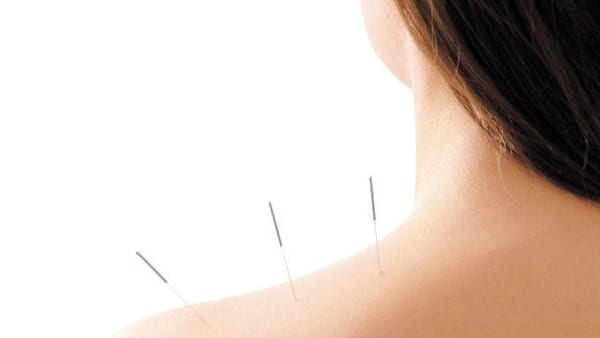
Acufacial is rooted in Traditional Chinese Medicine (TCM). Ultra-fine acupuncture needles are placed at specific points on the face. Rather than targeting a single structure, it aims to improve circulation and muscle tone across the face, and your TCM physician considers your skin alongside your overall constitution.
What Acufacial Involves
Acufacial does not involve injecting any product. It works through the needles alone, with the aim of:
- Regulating facial muscle tension
- Enhancing microcirculation
- Supporting collagen production
- Harmonising the flow of Qi throughout the body
Many people also find the sessions calming.
What to Expect from Each
Acufacial works gradually. After a single session, the effect typically lasts one to two weeks, so it is usually done as a course of weekly sessions followed by maintenance. You can read more on the Acufacial page.
Medical aesthetic treatments also need maintenance, at intervals that depend on the treatment. Anti-wrinkle injections, for example, are usually repeated every few months, while collagen from energy-based treatments builds over several months. Your doctor will explain what to expect before you decide.
Choosing Between Them, or Combining Them
The right choice depends on your concern. A deep line, lost volume or pigmentation may be better addressed with a medical treatment, while Acufacial suits people who prefer a gentle, needle-based approach or want to support their skin alongside other care. The two are not mutually exclusive: at RP Clinic, medical aesthetics and TCM are under one roof, and a consultation is the simplest way to find out which approach, or which combination, fits your skin.
Either way, the aim is the same: healthy skin that still looks like you.